
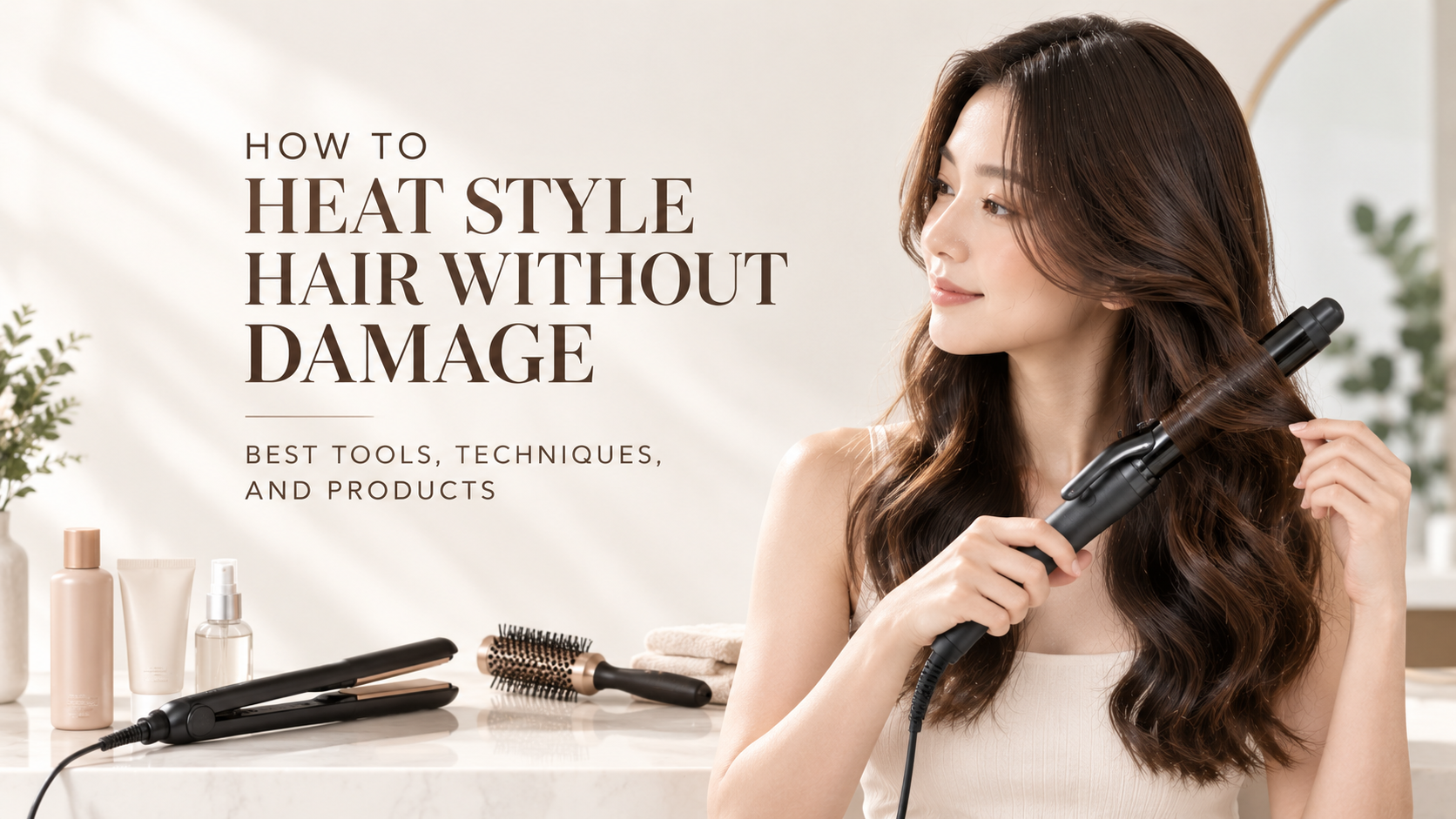
Heat styling without damage: tools, techniques, and products that work this is the ultimate goal for anyone who loves smooth, bouncy, or perfectly curled hair. While heat styling can instantly transform your look, it often comes at the cost of dryness, breakage, and dullness. The secret to maintaining healthy, beautiful hair lies in the details: using the right tools with temperature control, practising safe styling techniques, and applying products designed to shield and nourish. In this article, you’ll find practical, evidence-based guidance on minimising heat damage, tailored advice for different hair types, and the latest industry insights on keeping your hair strong and vibrant, even with regular styling.
Why Does Heat Styling Cause Hair Damage?
Heat styling tools like straighteners, curling irons, and blow dryers work by breaking down the hydrogen bonds in hair, allowing you to reshape it as desired. However, excessive or improper use of heat can strip hair of moisture, weaken the cuticle, and lead to split ends or breakage. The risk is especially high if you use high temperatures or style your hair when it’s already fragile or damp.
Not all hair is equally vulnerable. Fine or chemically treated hair is especially susceptible to heat damage, while thicker, coarser types may withstand higher temperatures but still suffer cumulative effects over time. Understanding the science of heat damage is crucial to making informed choices that protect your hair’s health, shine, and manageability.
What Happens Inside the Hair Shaft?
When exposed to high heat, the cortex the innermost layer of the hair loses moisture rapidly, causing the shaft to swell and the cuticle to lift. This disruption leaves the hair rough, unprotected, and more likely to absorb humidity, resulting in frizz and lacklustre texture. Repeated exposure can even alter the protein structure of hair, making recovery difficult without significant trimming or restorative treatments.
Signs Your Hair Has Suffered Heat Damage
Look out for increased dryness, split ends, a straw-like feel, loss of natural curl pattern, and an inability to hold styles. These are all tell-tale signs your hair needs a break from heat or a change in your styling routine.
How Do You Choose the Right Heat Styling Tools?
The foundation of heat styling without damage lies in selecting professional-quality tools. Modern tools with adjustable temperature settings, ceramic or tourmaline plates, and ionic technology make a significant difference in maintaining hair integrity. Always look for devices that offer even heat distribution and accurate temperature readings, as fluctuating or excessive heat is a major cause of damage.
For blow drying, opt for models with negative ion generation. These help to break down water molecules more efficiently, reducing drying time and minimising heat exposure. For those with fine or delicate hair, a non-ionic ceramic dryer is recommended to avoid flattening the cuticle, preserving natural volume and texture.
What Features Should You Prioritise?
Temperature control is non-negotiable choose tools that allow precise settings tailored to your hair’s needs. Infrared technology is another plus, as it heats hair from the inside out, reducing surface dehydration. Swivel cords, ergonomic grips, and auto shut-off features may not directly impact hair health but do improve safety and ease of use.
Are Expensive Tools Worth It?
While not every pricey tool guarantees better results, investing in reputable brands with solid build quality and proven technology is a smart move. Cheap, unregulated devices may overheat or deliver uneven temperatures, putting your hair at risk.
Which Heat Styling Techniques Are Safest for Your Hair?
Technique matters as much as the tool. To avoid damage, always start with towel-dried, detangled hair before blow drying. Use the lowest effective temperature and never linger on one section for too long. Sectioning the hair ensures even styling and prevents repeated passes over the same spot, a common cause of burn and breakage.
For straightening or curling, limit the number of passes and avoid using heat tools daily. Allow your hair to cool completely between passes this helps set the style and maintains its resilience. If you’re aiming for hair growth, embrace heat-free days and use alternative styling methods whenever possible.
Is Daily Heat Styling Advisable?
Even the best tools and products can’t fully offset the cumulative effects of daily heat styling. Experts recommend keeping heat use to two or three times per week, allowing the hair time to recover and retain its natural moisture balance.
What Role Do Heat Protectant Products Play?
Heat protectant sprays, creams, and serums form an invisible shield around the hair shaft, reducing direct exposure to high temperatures. Modern formulas contain silicones, proteins, and conditioning agents that lock in moisture, add shine, and smooth the cuticle. Some advanced products even claim to protect hair up to 232°C (450°F).
When applying a heat protectant, ensure even coverage from length to ends, focusing on the mid-lengths and tips where damage tends to concentrate. For added protection, combine a leave-in conditioner with a dedicated heat shield for multi-layered defence.
What Ingredients Should You Look For?
Look for products featuring dimethicone, cyclopentasiloxane, hydrolysed wheat protein, and natural oils like argan or coconut. These ingredients not only insulate against heat but also nourish the hair, reducing static and flyaways.
How Do Heat Protectants Enhance Styling Results?
Besides protection, these products often improve manageability, reduce frizz, and amplify shine. For best results, apply to damp hair before blow drying and again in small amounts before using irons or wands.
How Does Hair Type Affect Your Heat Styling Approach?
Understanding your hair’s unique properties is essential for safe heat styling. Fine, straight hair requires lower temperatures (120–150°C), while thick or coarse hair may need higher settings (170–185°C) for effective styling. Curly and textured hair benefits from tools with wide plates or diffusers that distribute heat gently and evenly.
Chemically treated or coloured hair is particularly vulnerable use even lower settings and extra protection. Always adjust your routine as your hair’s condition changes, especially after colouring, bleaching, or chemical straightening.
How Should You Style Curly or Textured Hair?
Use a diffuser attachment and set the dryer to a low or medium heat. Opt for creams rich in natural oils to maintain definition and moisture. Limit straightening to special occasions and always deep-condition afterwards.
Are Natural Products Effective?
Some natural oils, such as argan and grapeseed, offer mild heat protection up to moderate temperatures. However, they don’t replace dedicated thermal shields for high-heat tools. Use them as a supplement rather than a substitute.
What’s the Role of Leave-In Conditioners?
Leave-in conditioners help lock in moisture and form a preliminary barrier against heat. For best results, use them in conjunction with, not instead of, a heat protectant.
What Are Heatless Styling Tools?
Foam rods, bendy curlers, and silk ribbons allow users to create curls and waves overnight with zero heat. These tools have surged in popularity on social media, with many users reporting improved hair health and reduced frizz over time.
Can You Achieve Salon-Quality Looks Without Heat?
With the right products and a bit of patience, yes. Modern air-dry formulas and strategic braiding can yield sleek, defined styles that rival heat-styled hair, all while preserving your hair’s natural strength and shine.
What’s the Smartest Approach for Heat Styling Without Damage?
Heat styling without damage: tools, techniques, and products that work all come down to knowledge, moderation, and consistent care. Invest in high-quality, temperature-controlled tools, use professional-grade heat protectants, and tailor your approach to your hair’s unique needs. Incorporate restorative treatments and embrace heat-free styles to maintain resilient, glossy hair year-round. By making mindful choices every step of the way, you can enjoy the versatility of heat styling without sacrificing the health and beauty of your hair.
